

Not Everything Needs to Be Fixed
A small airport meltdown—and what it taught me about the power of holding space

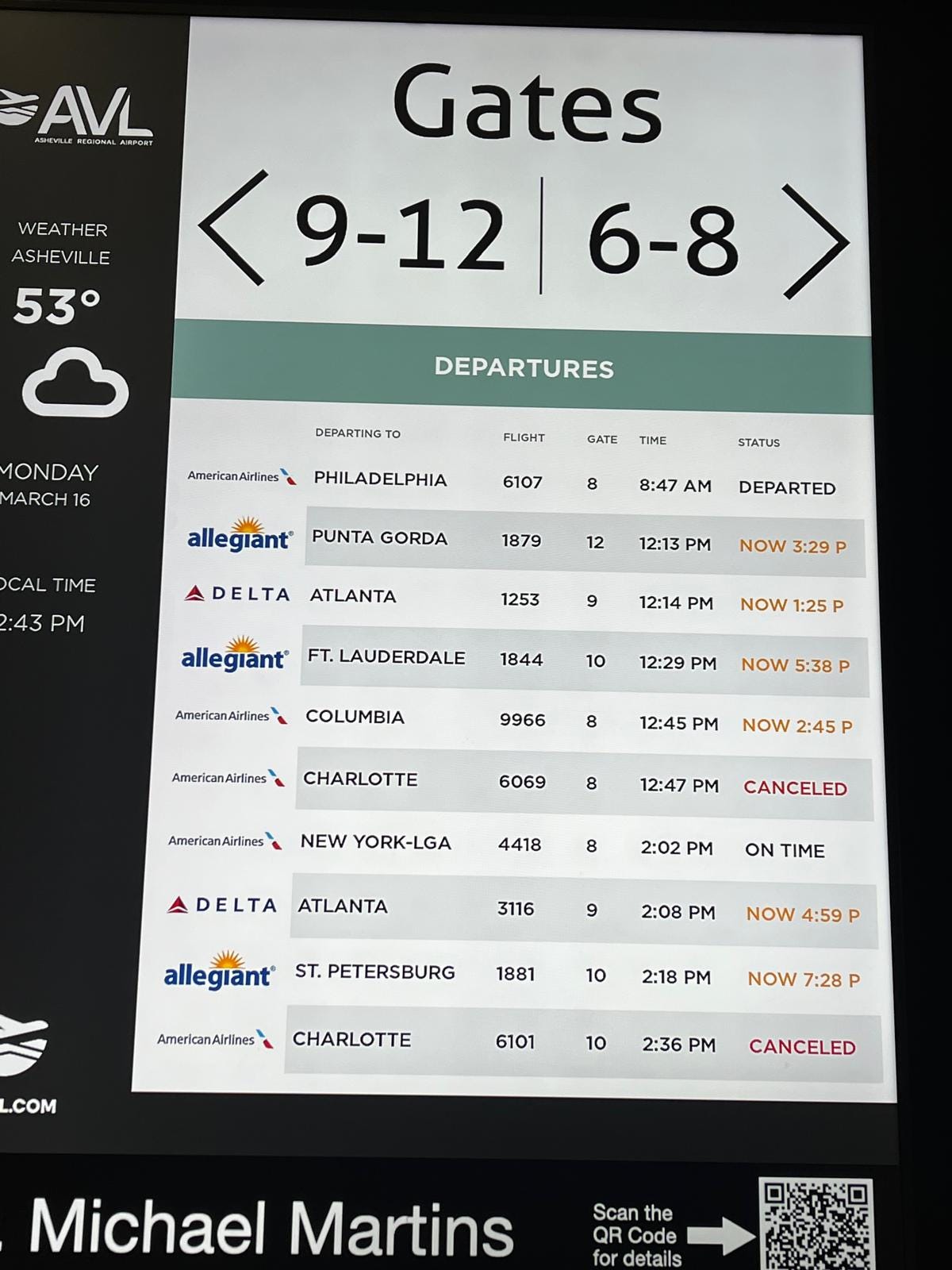
Eight hours in, I was on the floor of the Asheville airport, crying on the phone to my dad.
Not my finest moment.
I’d just had this amazing weekend in the mountains, I was feeling calm, reset, all of it—and then everything unraveled. Flights were delayed, then canceled. There were no real answers, just people standing around refreshing apps and getting more frustrated by the minute.
Somewhere in there, I lost it. Not a slow build, just suddenly fully overwhelmed—like I had no options, no control, and no clear way out. I’m a grown woman. And I’m on the phone crying to my dad because I can’t figure out how to get home.
It wasn’t just me. There were over 13,000 delays and cancellations across the U.S. yesterday. The whole system was breaking down. And so was my patience.
But here’s the part that is sticking with me.
On the phone with my Dad, he didn’t try to fix anything. He didn’t jump into solutions or tell me what to do. He just listened. He asked a few questions, let me talk, let me be frustrated—and slowly, I calmed down.
Nothing had actually changed. I was still stuck, still trying to figure out how to get home. (We ended up leaving the airport at 8:30pm after being there since 10—and driving from Asheville to Fort Lauderdale.) But after our chat, something softened.
When I finally got home and had a little space to reflect, two things really stood out.
First, I’m allowed to be mad when things don’t go my way.
For the first six hours, I was actually fine—grateful, even. My son was with his grandparents, I could work from anywhere, and it almost felt like an adventure. But after the second delay, something changed. I got frustrated. Then grumpy. And almost immediately, I felt like I shouldn’t be.
There were people way worse off than me. Families with small kids, people missing bigger things. So I tried to talk myself out of it. But now I realize, just because someone else has it worse doesn’t mean I don’t get to feel what I feel.
Second, I felt better because my dad didn’t try to fix anything.
He just listened. And it was probably uncomfortable for him. But he didn’t jump in with solutions or try to change the situation. And somehow, that helped more than anything else could have. He probably doesn’t even realize it, but he helped me by not helping.
We’re so conditioned to fix things. To offer solutions, make things better, relieve discomfort—ours or someone else’s—as quickly as possible.
But I think if we’re honest, a lot of us “helping” is actually about managing our own discomfort. We don’t like seeing someone we care about struggle. We want to be useful. We want to calm things down. So we move in too quickly, and without realizing it, we send a message: this shouldn’t be happening, let’s get you out of it.
And, since we’re being honest… I see this in myself, especially with my husband. When he’s frustrated, I move in fast. I ask questions, try to understand, try to help. On the surface it looks supportive, but really, it’s because I’m uncomfortable when he’s uncomfortable. I want to make it better. And in doing that, I can rush him out of exactly what he needs—to just feel it.
Real support often looks much simpler, and much harder. It’s listening without interrupting, resisting the urge to solve, letting someone fully feel what they’re feeling, and trusting that they’ll find their way through.
It’s not passive. It’s presence.
This shows up everywhere—in relationships, in teams, in leadership. The fastest way to shut someone down is to try to fix them too quickly. If people don’t feel safe to be uncomfortable around you, they won’t bring you anything real.
Talking on the phone didn’t change anything externally. I was still stranded, still figuring it out.
But internally, it shifted me a little. Not because anything was solved, but because someone sat with me in it.
And it made me realize how often I rush in too quickly, how often I try to make things better before I have fully let someone be where they are.
That is the part I am paying attention to now.
This is a deeply human post, Stephanie! There are days when I arrive home, exhausted, to chores that feel overwhelming. Self pity bubbles to the surface (along with insecurity) and that old story "if only I had a partner..." Then I remember all the single parents raising kids and I tell myself that I have no reason to be (tired, angry, whatever). Thanks to your willingness to share your vulnerability, I now see I have the legitimate option to let it be. I don't have to rationalize away my feelings; I don't have to "buck up" (though I don't need to give away my peace, either). Just like there are things that don't need fixing, there are things that don't need answers. I glad we have each other to help us sit in the space of "not solving" - which is actually where true liberation lies.